


The business case for this integration is compelling. You'll see cost savings through reduced operational expenses as chatbots handle high volumes of repetitive queries without additional staffing costs. Your customers benefit from faster response times and consistent service quality across all touchpoints. The technology enables your support operation to scale efficiently during peak periods without the traditional constraints of hiring and training new staff.
This article walks you through the practical aspects of integrating chatbots into an outsourced support strategy. You'll discover how to select the right outsourcing partner with chatbot expertise, implement technical integrations with your existing systems, and establish security protocols that protect customer data.
You'll learn about training requirements, performance measurement strategies, and how to create a hybrid support model where AI-powered chatbots and human agents work in harmony. Whether you're exploring chatbot integration for the first time or looking to optimize your current setup, you'll find actionable insights to enhance your customer support operations.
Understanding Chatbots in Customer Support
Chatbots are changing the way businesses interact with customers. These AI-powered tools are always available, handling inquiries and solving problems without the need for human involvement. Chatbot automation is revolutionizing traditional support methods by providing instant answers to customer questions, directing complex issues to the right departments, and performing routine tasks like tracking orders or resetting passwords.
How Chatbots Work
The technology behind modern chatbots allows them to understand natural language, figure out what the customer wants, and provide relevant solutions. Here's how it works:
- Understanding Natural Language: Chatbots use advanced algorithms to process and understand human language, including slang and variations in phrasing.
- Interpreting Customer Intent: By analyzing the context of the conversation, chatbots can determine the specific intention behind a customer's message.
- Delivering Relevant Solutions: Based on their understanding of the query, chatbots retrieve information from databases or knowledge bases to offer accurate responses.
 Emily Carter
Benefits of Chatbots in Customer Support
Chatbots offer several advantages for businesses when it comes to customer support:
- 24/7 Availability: Unlike human agents who have limited working hours, chatbots can assist customers at any time of day or night. This means that even if a customer reaches out at 2 AM with a question about shipping, the chatbot can immediately access order information and provide tracking details.
- Scalability: Chatbots can handle multiple conversations simultaneously, making them ideal for businesses with high volumes of inquiries. This scalability ensures that no customer has to wait long for assistance.
- Consistency: Chatbots follow predefined scripts and guidelines, ensuring that every interaction maintains a consistent tone and message. This consistency helps build trust and reliability in your brand.
Personalization in Chatbot Interactions
One common criticism of automated systems like chatbots is that they lack personalization and can come across as robotic. However, advanced chatbots are now capable of delivering personalized responses based on various factors such as:
- Customer Data: By integrating with customer relationship management (CRM) systems or other databases, chatbots can access information about individual customers such as their name, preferences, and previous interactions.
- Purchase History: If a customer has made previous purchases from your business, chatbots can use this information to tailor recommendations or offers specific to that customer's interests.
- Browsing Behavior: By tracking how customers navigate your website or app, chatbots can gain insights into their preferences and suggest relevant products or features.
The Role of Sentiment Analysis
In addition to personalization based on data points, modern chatbots are also incorporating sentiment analysis techniques into their algorithms. Sentiment analysis involves using natural language processing (NLP) techniques to determine the emotional tone behind a customer's message—whether it's positive, negative, or neutral.
By understanding the sentiment behind each interaction:
- An frustrated customer may receive empathetic responses acknowledging their frustration along with options for escalating the issue if necessary.
- A casual inquiry could be met with friendly conversational assistance without any urgency.
Multichannel Deployment of Chatbots
Another significant advantage of chatbots is their ability to be deployed across multiple channels where customers engage with your business:
- Website: Integrating a chatbot on your website allows visitors to get instant answers while browsing through product pages or service offerings.
- Mobile App: Embedding a chatbot within your mobile app provides users with seamless access to support without having to switch between different platforms.
- Social Media Platforms: Many businesses now use messaging apps like Facebook Messenger or WhatsApp as primary communication channels—having an active presence here through bots ensures prompt responses.
- Messaging Apps: In addition to social media platforms mentioned above, integrating bots into popular messaging applications allows you reach audiences who prefer these mediums over traditional channels.
This multichannel approach creates consistency in support experiences regardless of where customers choose to engage—whether it's via website chat widget or direct messages on social media platforms.
 Emily Carter
Benefits of Integrating Chatbots with Outsourced Support
When you combine chatbots with your outsourced support strategy, you unlock significant cost savings that directly impact your bottom line. Consider a typical scenario: a company handling 10,000 monthly inquiries at an average cost of $5 per human-handled interaction spends $50,000 monthly.
By deploying chatbots to handle 60% of routine queries—password resets, order tracking, basic product information—you reduce that expense to $20,000 for human agents while chatbot operational costs typically run at $0.50 per interaction, adding just $3,000. You're looking at potential savings of $27,000 monthly or $324,000 annually.
The efficiency gains extend beyond simple math. Chatbots process multiple conversations simultaneously, eliminating queue times for straightforward questions. Your outsourced team at a software company might previously spend 15 minutes per customer walking through account setup procedures.
A well-trained chatbot completes the same task in 2 minutes, freeing your human agents to tackle technical troubleshooting that requires critical thinking and empathy. During peak periods—think Black Friday for e-commerce or tax season for financial services—this scalability prevents customer frustration and maintains service quality without emergency hiring.
Multichannel support becomes genuinely achievable when chatbots join your outsourced team. You can deploy the same bot across your website, Facebook Messenger, WhatsApp, and mobile app, ensuring customers receive consistent assistance regardless of their preferred platform. A customer starting a conversation on your website can seamlessly continue it via mobile app without repeating information. This unified presence strengthens customer engagement because you're meeting people where they already spend time.
The combination creates a force multiplier effect: your outsourced agents handle fewer repetitive tasks, your customers get instant responses across all channels, and your operational expenses decrease while service quality improves. You're building a support infrastructure that scales with demand rather than against it.
Selecting the Right Outsourcing Partner for Chatbot Integration
Your choice of outsourcing partner can make or break your efforts to integrate chatbots into your support strategy. It's crucial to find a partner who not only understands the technical aspects of deploying chatbots but also has a deep understanding of what it takes to provide excellent customer service.
Here are some key factors to consider when evaluating potential partners:
- Proven experience with chatbot integration - Look for partners who have successfully implemented AI-powered support systems in businesses similar to yours. Ask for case studies and client references to verify their track record.
- Technical capabilities - Ensure that your partner has the necessary technology infrastructure in place to support seamless integration with popular chatbot solutions like Intercom, Drift, or Zendesk Chat. Inquire about their API capabilities and system compatibility.
- Access to skilled human agents - Even though chatbots will handle initial interactions, the quality of human agents is still important. Assess your partner's hiring practices, training programs, and agent retention rates to gauge the competence of their support team.
- Flexibility in scaling operations - Your support needs may vary over time, so it's essential to choose a partner who can quickly adjust their operations without compromising service quality.
- Understanding of your industry - Partners with knowledge of your industry will be better equipped to configure chatbots and address sector-specific inquiries effectively.
The right outsourcing partner should offer more than just additional staff to manage peak periods. They should also provide strategic guidance on optimizing chatbot performance, utilize advanced technology tools, and employ skilled agents who know when to intervene and take over from automated systems. By choosing the right partner, you're not simply delegating tasks—you're bringing on board a team that enhances your entire support ecosystem.
Make sure to request detailed information about how potential partners manage their chatbots, including how they train bots, track performance metrics, and continuously improve based on customer interactions.
Training and Collaboration for Effective Integration
Agent training is crucial for successful chatbot integration with your outsourced support team. It's important to educate your outsourced agents about how your chatbot works, when it hands off conversations, and what information it gathers before passing on to human support. This understanding helps avoid repetitive questions and ensures a smooth experience for your customers.
Your outsourced team needs in-depth product knowledge that goes beyond just knowing the frequently asked questions. When a chatbot transfers a conversation, the agent should be able to grasp the context right away and continue the discussion without making customers repeat themselves. I've seen companies provide detailed product documentation, video tutorials, and access to internal knowledge bases to make sure outsourced agents can handle complex queries that chatbots can't solve.
Regular training sessions should include:
- Chatbot capabilities and limitations
- Common escalation scenarios
- Your brand voice and communication style
- Product updates and new features
- Customer data interpretation from chatbot interactions
It's essential to establish clear communication channels between your internal team and outsourcing partner right from the start. Set up dedicated Slack channels, weekly sync meetings, and shared documentation platforms where both teams can work together in real-time. Whenever there are updates or new features for your chatbot, it's important that your outsourced agents learn about these changes immediately.
You should also create feedback loops where outsourced agents can report any issues with chatbot performance, customer pain points, and recurring questions that the bot struggles to answer. This feedback will help you improve your chatbot's responses and enhance the overall support experience.
Additionally, regular collaboration sessions will give both teams an opportunity to review conversation transcripts, identify areas for improvement, and agree on best practices for transitioning from automated support to human support.
Technical Integration with Existing Systems
Your chatbot's effectiveness depends on CRM integration and system compatibility. By connecting your chatbot to your existing CRM platform, you create a unified system where customer interactions smoothly transition between automated and human support.
CRM Integration: Building on Established Relationships
The integration process begins with ensuring that your chatbot can access and update customer records in real-time. This means that when a customer contacts you through your outsourced support channel, the chatbot instantly retrieves their purchase history, previous support tickets, and communication preferences. Instead of starting from scratch with each interaction, you're building upon existing relationships.
System Compatibility: Connecting with Other Tools
System compatibility goes beyond just your CRM. Your chatbot also needs to communicate with:
- Help desk software for creating and routing tickets
- Knowledge base systems for retrieving accurate information
- Payment processing platforms for handling transaction-related queries
- Inventory management systems for providing updates on product availability
Tailored Responses: Personalization through Data Access
The data that your chatbot accesses becomes the basis for tailored responses. Rather than sending generic replies, your automated system can acknowledge a customer's VIP status, reference their recent order, or suggest products based on their browsing history. This level of personalization elevates basic automation into intelligent customer service.
Collaborating with Your Outsourcing Partner's Technical Team
To implement these integrations effectively, it's important to collaborate closely with the technical team of your outsourcing partner. Together, you can map out how data will flow between systems and establish API connections. They should provide detailed documentation on which systems their infrastructure supports and what custom integrations they can develop.
While the initial technical setup may require some investment, the benefits will be evident in reduced handling times and higher first-contact resolution rates.
Benefits for Outsourced Agents: Contextual Information at Their Fingertips
This integration also brings advantages to your outsourced agents. When the chatbot hands off a conversation to an agent, they receive complete context—eliminating the need for customers to repeat information they've already shared.
 Emily Carter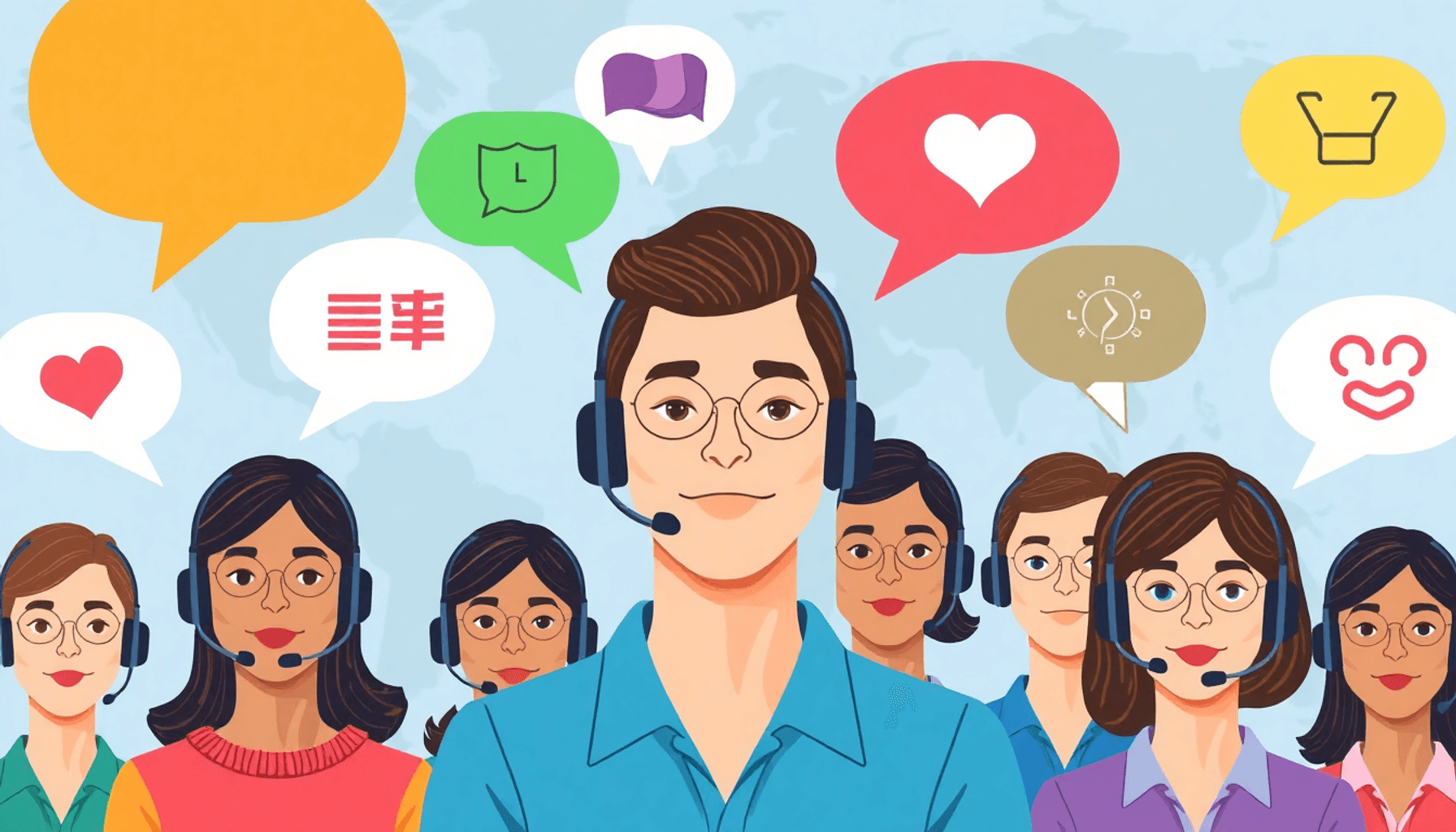
Data Security and Privacy Considerations in Chatbot Deployment
When integrating chatbots into your outsourced support strategy, data privacy and security protocols become non-negotiable priorities. Your chatbot will handle sensitive customer information—from personal details to payment data—making robust security measures essential from day one.
1. Implementing Encryption
Encryption stands as your first line of defense. You need end-to-end encryption for all data transmitted between customers, chatbots, and your support systems. This means implementing SSL/TLS protocols for data in transit and AES-256 encryption for data at rest. Your outsourcing partner should provide detailed documentation of their encryption standards and regularly update these protocols to address emerging threats.
2. Ensuring Compliance
Compliance requirements vary by industry and geography. If you operate in healthcare, HIPAA compliance is mandatory. Financial services require adherence to PCI DSS standards. European customers bring GDPR obligations into play, while California residents fall under CCPA protection. You must verify that your outsourcing partner's chatbot infrastructure meets all applicable regulations for your specific market.
3. Configuring Access Controls
Access controls require careful configuration. You should implement role-based permissions that limit which outsourced agents can view specific customer data through the chatbot interface. Multi-factor authentication adds another security layer, preventing unauthorized access even if credentials are compromised.
4. Conducting Regular Security Audits
Regular security audits protect your chatbot deployment long-term. Schedule quarterly penetration testing and vulnerability assessments with your outsourcing partner. These audits identify potential weaknesses before malicious actors can exploit them. You should also establish clear data retention policies—defining how long customer information stays in chatbot logs and when automatic deletion occurs.
5. Clarifying Security Responsibilities in Contracts
Your service level agreement with the outsourcing provider must explicitly outline security responsibilities, breach notification procedures, and liability terms. This contractual clarity protects both parties and ensures accountability throughout the chatbot deployment lifecycle.
Overcoming Challenges in Implementing Chatbots with Outsourced Support Teams
Implementing chatbots with outsourced teams presents unique obstacles that require strategic planning and careful execution. You need to address these challenges head-on to create a seamless support experience.
Choosing the Right Chatbot Platform
Choosing the appropriate chatbot platform demands thorough evaluation of your business requirements. You should assess factors like integration capabilities, scalability, natural language processing accuracy, and pricing models. Different platforms excel in different areas—some offer superior AI capabilities while others provide better customization options. Your choice impacts how effectively your outsourced team can manage and optimize the chatbot over time.
Customization Challenges
Customization challenges emerge when aligning chatbots with your brand identity and operational workflows. Your chatbot must reflect your company's tone, whether that's professional, friendly, or technical. This becomes more complex when working with outsourced teams who may not initially understand your brand nuances. You need to provide detailed guidelines covering:
- Response templates that match your brand voice
- Escalation protocols specific to your business processes
- Industry-specific terminology and product knowledge
- Conversation flows that mirror your customer journey
The outsourced team requires comprehensive documentation and ongoing feedback to fine-tune these elements. You'll face iterations and adjustments as the chatbot learns from real interactions. Training sessions should include role-playing scenarios where agents practice handling chatbot handoffs, ensuring they understand when and how the bot should respond versus when human intervention becomes necessary.
Synergy Between Chatbots and Human Agents: A Hybrid Support Model Approach
The hybrid support model is the perfect balance between automation and human intelligence. Instead of replacing your outsourced agents, you're giving them the tools they need to provide outstanding service by eliminating the repetitive tasks that take up their time.
How Chatbots and Human Agents Work Together
- Chatbots handle routine queries: Chatbots are great at dealing with the predictable, everyday questions that flood your support channels. Things like password resets, order status checks, basic product information, and frequently asked questions can all be automated workflows.
- Human agents tackle complex issues: When a customer needs help with something complicated or sensitive—like a technical problem or a billing dispute—they get connected to a skilled agent who has the time and expertise to provide thoughtful assistance.
The Importance of Seamless Handoffs
The success of your hybrid model depends on how well you transfer conversations between the chatbot and human agent. It's crucial to have smooth transitions that keep the conversation context intact. Here's how it works:
- Chatbot identifies when it can't resolve an issue: The chatbot uses various methods such as keyword triggers, sentiment analysis, or customer requests to determine if it's unable to solve a problem.
- Instantly route the conversation to an available agent: Once the chatbot recognizes its limitations, it should immediately pass on the conversation to an available agent along with the complete chat history.
- No need for customers to repeat themselves: This way, customers won't have to go through the hassle of explaining their problem again.
The Benefits of Implementing This Approach
When you implement this approach correctly, you'll see a significant drop in response times:
- Your chatbot will be able to handle 60-80% of incoming queries without needing any human intervention.
- Complex cases will be directed to qualified agents within seconds instead of being stuck in long queues.
- Your outsourced team will operate at maximum efficiency because they'll be spending their time on tasks where their expertise adds real value, rather than answering "What's your return policy?" for the hundredth time that day.
Measuring Success and Optimizing Your Strategy Post-Implementation of Chatbots in Outsourced Support Systems
You've deployed your chatbot solution within your outsourced support framework. Now comes the critical phase: measuring what's working and identifying areas for improvement. The performance metrics you track will determine whether integrating chatbots into your outsourced support strategy delivers the expected value.
Essential Performance Metrics to Monitor
Start by tracking these key indicators that reveal your chatbot's true impact:
- First Contact Resolution Rate (FCR) - The percentage of customer issues resolved without escalation to human agents
- Average Response Time - How quickly your chatbot engages with customers compared to pre-implementation benchmarks
- Containment Rate - The proportion of conversations handled entirely by the chatbot without human intervention
- Customer Satisfaction Score (CSAT) - Direct feedback on chatbot interactions through post-conversation surveys
- Cost Per Interaction - The financial efficiency gained through automation versus traditional support channels
- Escalation Rate - How often conversations transfer from bot to human agent, indicating complexity or chatbot limitations
You'll want to establish baseline metrics before implementation, then compare them against post-deployment data. This comparison shows you exactly where your chatbot adds value and where it falls short.
Leveraging Feedback for Continuous Improvement
Your outsourced agents provide invaluable insights into chatbot performance. They see firsthand which queries the bot struggles with and where customers express frustration. Create regular feedback loops with your outsourcing partner to capture these observations.
Customer feedback through surveys, ratings, and direct comments reveals pain points that analytics alone might miss. When customers rate a chatbot interaction poorly, dig into the conversation logs to understand what went wrong.
Analytics data from your chatbot platform shows patterns in user behavior. You'll discover which conversation paths lead to successful resolutions and which create confusion. Use this information to refine your chatbot's responses, expand its knowledge base, and improve its ability to recognize customer intent. Regular A/B testing of different response styles helps you optimize the customer experience while maintaining your brand voice.
Conclusion
Integrating chatbots into your outsourced support strategy is more than just a way to save money—it's a scalable customer service solution that positions your business for sustainable growth. You've seen how this hybrid approach transforms customer service from a reactive expense center into a proactive value driver.
The real power comes when you stop seeing chatbots and human agents as competitors. Instead, they work together. Your chatbots handle the repetitive inquiries that drain agent productivity, while your skilled outsourced team tackles the nuanced problems that require empathy, critical thinking, and creative problem-solving. This division of labor creates efficiency without sacrificing the human touch your customers value.
You need to approach this integration strategically. Select partners who understand both AI technology and your industry's unique demands. Invest in proper training, establish clear communication protocols, and prioritize data security from day one. Monitor your KPIs closely, but remember that numbers only tell part of the story—customer sentiment and agent feedback reveal the qualitative impact that drives long-term loyalty.
The businesses that thrive in tomorrow's competitive landscape will be those that master this balance today. By integrating chatbots into your outsourced support strategy thoughtfully, you're building a foundation for exceptional customer experiences that scale with your ambitions while maintaining the authenticity that sets your brand apart.
FAQs (Frequently Asked Questions)
What are the key benefits of integrating chatbots into outsourced support strategies ?
Integrating chatbots into outsourced support strategies offers significant benefits including cost savings through automation, improved customer experience with 24/7 personalized responses, increased efficiency in handling inquiries, and enhanced multichannel customer engagement.
How do chatbots enhance customer support when integrated with outsourced teams ?
Chatbots automate routine customer service tasks, provide round-the-clock support, and deliver personalized responses, allowing outsourced support teams to focus on complex issues. This hybrid support model reduces response times and improves overall service quality.
What criteria should be considered when selecting an outsourcing partner for chatbot integration ?
Choosing the right outsourcing partner involves ensuring they have expertise in chatbot integration, access to skilled representatives, and utilize advanced technology platforms. This ensures seamless collaboration and effective deployment of chatbot solutions within outsourced support.
How important is training and collaboration in the effective integration of chatbots with outsourced support ?
Training outsourced agents on chatbot usage and company product knowledge is crucial. Establishing clear communication channels between the company and outsourcing teams fosters smooth operations and maximizes the benefits of chatbot integration.
What technical considerations are essential when integrating chatbots with existing customer support systems ?
Integrating chatbots with CRM platforms is vital to streamline interactions and leverage customer data for tailored responses. Ensuring system compatibility facilitates efficient communication and enhances the overall customer support experience.
How can organizations address data security and privacy concerns when deploying chatbots in outsourced support ?
Implementing robust security protocols to protect sensitive information and ensuring compliance with industry privacy regulations are essential steps. These measures safeguard customer data during chatbot deployment, maintaining trust and regulatory adherence.


