

For customer service teams, especially those managing outsourced partners, having a strategic playbook for these critical moments is non-negotiable. An effective apology letter sample for mistake is more than a template; it's a tool for de-escalation, trust-building, and operational improvement.
This guide provides a detailed breakdown of eight essential apology letter samples for common CX mistakes, from minor service hiccups to significant data incidents. We move beyond generic templates to offer a comprehensive analysis of each scenario, equipping you with the strategic insights needed to handle customer issues with confidence and professionalism.
You will find a curated collection of apology letter and email templates covering frequent customer service failures, including:
- Service delays and missed SLAs
- Billing and overcharge errors
- Product defects or delivery issues
- Serious data handling and privacy incidents
For each apology letter sample for mistake, we will break down the crucial elements: when to use it, the appropriate tone, specific wording choices, and effective remediation language. You will get actionable checklists and customisation notes designed for immediate implementation in high-pressure contact centre environments. By mastering the art of the apology, your team can effectively de-escalate frustration, rebuild customer trust, and gather critical feedback to prevent future issues.
1. Service Failure & Delayed Resolution Apology Letter (Missed SLAs / Extended Support Delays)
This type of apology is a formal acknowledgement of a significant operational breakdown, specifically when a promised service level agreement (SLA) is breached or when a customer's issue faces an unacceptable delay. It's a critical communication tool for B2B SaaS companies, BPO providers, and any business where timely support is a core promise. This formal apology letter sample for a mistake goes beyond a simple "sorry" by providing transparency, accountability, and a clear path to resolution.
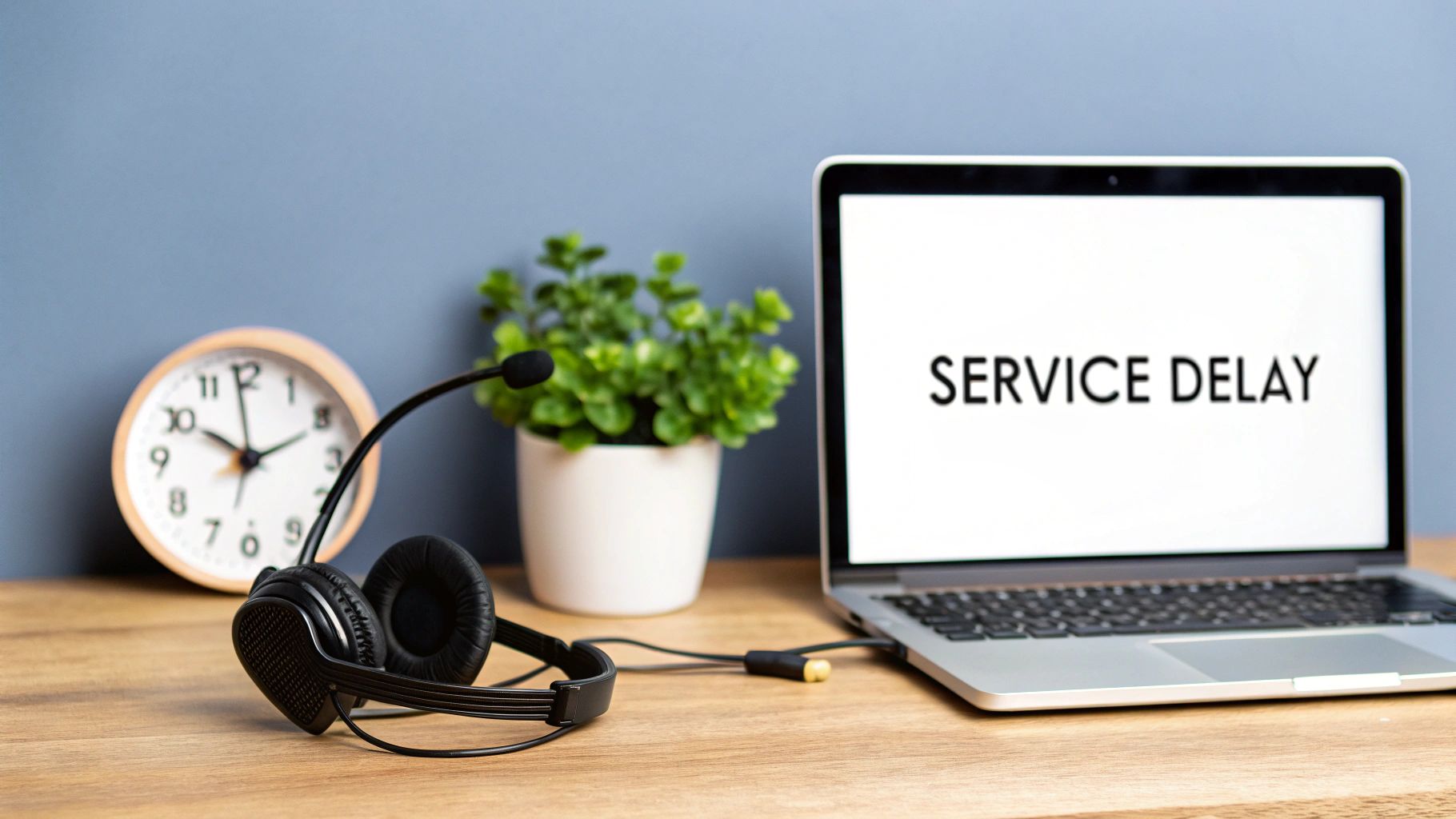
This letter is deployed when systemic issues like ticket backlogs, staffing shortages, or escalation bottlenecks lead to customer frustration, moving beyond individual errors to address a wider service failure.
Strategic Breakdown and Best Practices
When drafting this apology, specificity and ownership are paramount. Vague apologies can feel dismissive; a detailed account demonstrates that you have thoroughly investigated the issue and respect the customer's time and business.
- Quantify the Failure: Don't just say there was a delay. State the exact SLA that was missed (e.g., "our 24-hour response time commitment") and the precise duration of the delay (e.g., "a delay of 72 hours"). This transparency builds credibility.
- Explain the "Why" Concisely: Briefly explain the root cause without making excuses. For instance, "a sudden surge in ticket volume following our recent platform update" is better than a generic "unforeseen circumstances".
- Outline Concrete Remediation: Detail the immediate and long-term steps you are taking. This is where you can shift the focus from reactive apologies towards a more proactive stance. To improve your processes, you can learn more about how to transition from reactive to preventive customer support.
- Assign Clear Ownership: Ensure the communication comes from a manager or team lead. For severe breaches, an apology from a director or VP-level executive shows the issue has high-level visibility and accountability.
2. Billing Error Apology Letter for Overcharges or Duplicate Charges
This apology addresses financial mistakes that directly impact a customer's wallet, such as overcharges, duplicate billing, incorrect tier pricing, or failed refunds. It's an essential communication for subscription-based SaaS, ecommerce, and any business model with recurring payments. This apology letter sample for a mistake is crucial for restoring trust after a sensitive financial error, proving not just that you've fixed the problem but that your financial systems are reliable.
This letter is deployed when system glitches, manual data entry errors, or migration issues lead to incorrect invoices. It moves beyond a simple refund notification to provide a full accounting of the error, the correction, and preventative measures, demonstrating respect for the customer's financial governance.
Strategic Breakdown and Best Practices
When apologising for a billing error, absolute clarity and immediate financial restitution are non-negotiable. Ambiguity can be interpreted as evasiveness, further damaging the customer's confidence in your financial integrity.
- Provide a Clear Financial Breakdown: Don't just state the refund amount. Show the maths. Present a simple table or line-item breakdown illustrating the incorrect charge, the correct charge, and the resulting credit or refund amount. This transparency is vital for their accounting records.
- Explain the Root Cause Transparently: Briefly explain what caused the error without technical jargon. For example, "a sync error during our recent billing system migration resulted in a duplicate charge for your May subscription" is far more credible than "a billing system issue".
- Detail the System-Level Fix: Assure the customer this won't happen again. Mention the specific preventative measures being implemented, such as "We have now implemented an automated verification script to prevent duplicate invoices from being generated in the future."
- Offer a Direct Line for Financial Teams: For B2B clients, financial errors create work for their finance or accounting departments. Provide a direct contact name and email for a senior team member who can speak with the customer’s accountant to resolve any discrepancies, showing you respect their internal processes.
3. Product Quality / Delivery Defect Apology Letter from Customer Service Team
This apology letter is a frontline response from customer service agents when a customer receives a defective product, a damaged shipment, the wrong item, or an item that fails to meet quality standards. It is an essential communication tool for ecommerce, retail, and any product-driven business where the customer support team is the first point of contact for physical goods failures. This apology letter sample for a mistake aims to rapidly address customer frustration, restore confidence in the brand, and provide a clear, hassle-free solution.
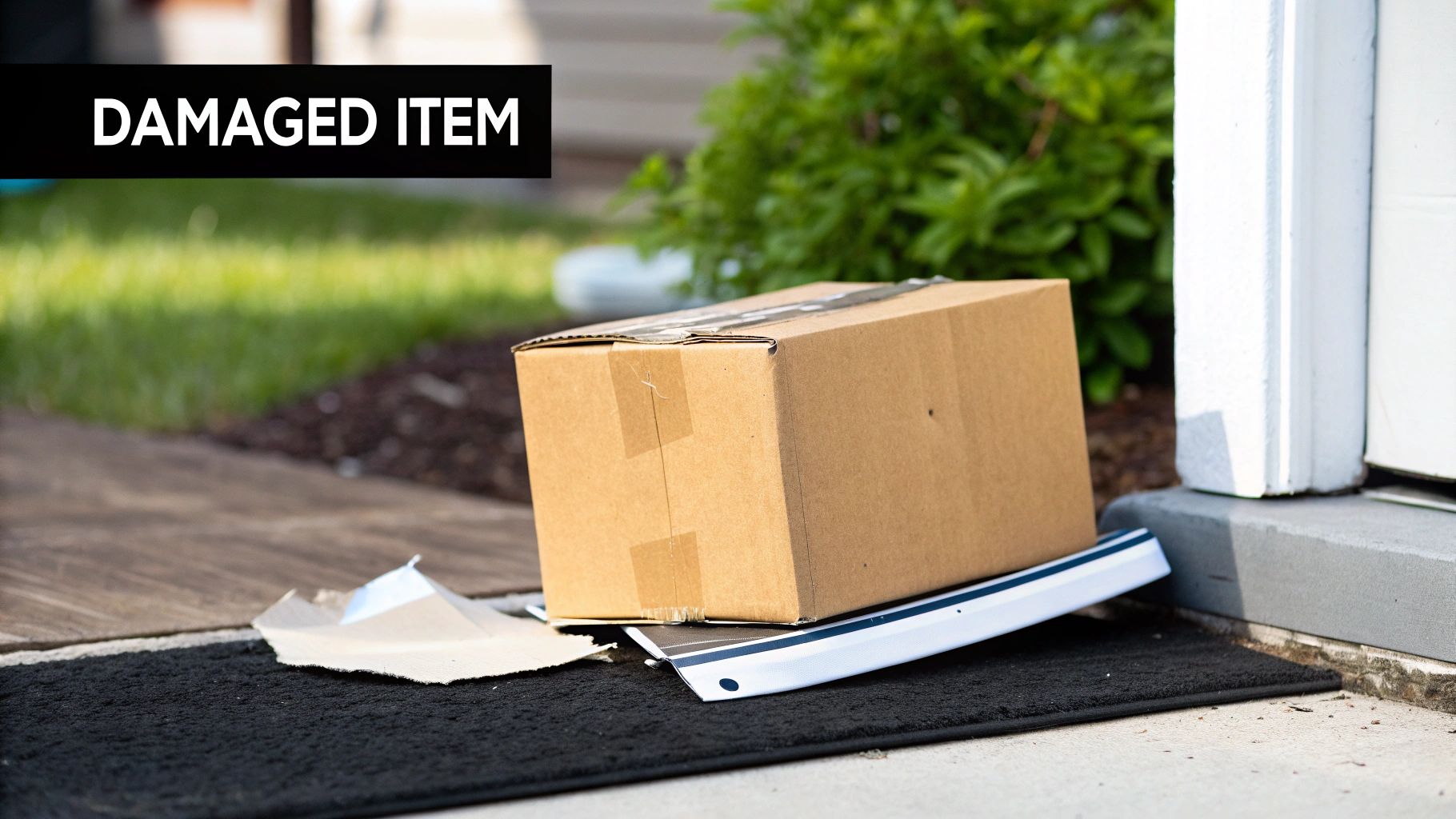
This type of communication is deployed immediately upon a customer reporting an issue. Its effectiveness relies on empowering agents to resolve the problem swiftly, turning a negative experience into a demonstration of excellent customer care, much like how Amazon support handles damaged goods with immediate replacements.
Strategic Breakdown and Best Practices
When apologising for a product defect, the focus should be on empathy, speed, and a simple resolution. The customer is already inconvenienced; the apology process should not add another layer of friction. The goal is to make the customer feel heard and to make the solution as effortless as possible.
- Acknowledge and Validate: Start by explicitly acknowledging the specific problem reported. Instead of "we're sorry for the issue," use language like, "I am so sorry to hear that your new headphones arrived with a cracked casing." This validates the customer's complaint.
- Provide an Immediate Solution: Don't ask the customer what they want; offer the best possible solution proactively. For example, "We are shipping a replacement to you immediately, and there's no need to return the damaged item." This removes the burden from the customer.
- Create a Feedback Loop: Explain that their report is valuable. Mention that the feedback will be passed directly to the quality assurance or logistics team to prevent future occurrences. This shows the company is learning from its mistakes.
- Empower Frontline Agents: Equip your support teams, including outsourced partners, with clear guidelines and the authority to issue refunds, replacements, or credits without needing managerial approval. This is crucial for a fast, one-touch resolution.
4. Communication Failure Apology Letter for Unclear Information or Mixed Messages
This apology addresses situations where customers receive contradictory, confusing, or incomplete information from different support channels or agents. It’s an essential tool for any business with a multi-channel support presence, such as retail, banking, or telecommunications, where inconsistent messaging can quickly erode trust and create significant customer frustration. This formal apology letter sample for a mistake aims to restore clarity, take ownership of the communication breakdown, and rebuild the customer's confidence in the organisation’s reliability.
This letter is deployed when a customer has been given different answers via phone, email, and chat, or when follow-up communications were missed, leading to confusion and wasted effort. It acknowledges the failure in internal processes that allowed the inconsistency to occur.
Strategic Breakdown and Best Practices
When apologising for a communication failure, demonstrating you understand the specifics of the confusion is crucial. A generic apology for "any confusion" will feel impersonal; instead, pinpointing the exact points of contradictory advice shows you've investigated the interaction history thoroughly.
- Reference Specific Inconsistencies: Acknowledge the exact points of failure. For example, state, "We understand that our phone agent advised you of a £20 credit, while our online chat support stated this was not possible. We deeply regret this contradictory information." This validates the customer's frustration.
- Provide a Single Source of Truth: Correct the record definitively. Clearly state the accurate information and the final resolution. Assign a single, named point of contact (e.g., "I will personally oversee your case") for a set period to prevent the customer from being passed around again.
- Explain Process Improvements: Detail the internal actions being taken to prevent recurrence. This could be updating a knowledge base, conducting an agent training session on the specific topic, or implementing a new multi-channel verification process. This shows a commitment to systemic improvement.
- Follow-Up Proactively: Don't wait for the customer to reach out again. Schedule a follow-up call or email two weeks later to confirm that the resolution is holding and that no further confusion has arisen. This proactive step reinforces your commitment to restoring their trust.
5. Account Access & Data Handling Apology Letter for Privacy / Security Incidents
This is arguably one of the most critical apologies a business can issue. It addresses mistakes involving data breaches, unauthorised account access, or the mishandling of sensitive customer information. For any company, especially those with outsourced support teams handling data under regulations like GDPR, CCPA, or HIPAA, this communication is non-negotiable. This formal apology letter sample for a mistake must demonstrate absolute security accountability, regulatory awareness, and a clear, immediate plan to restore customer trust.
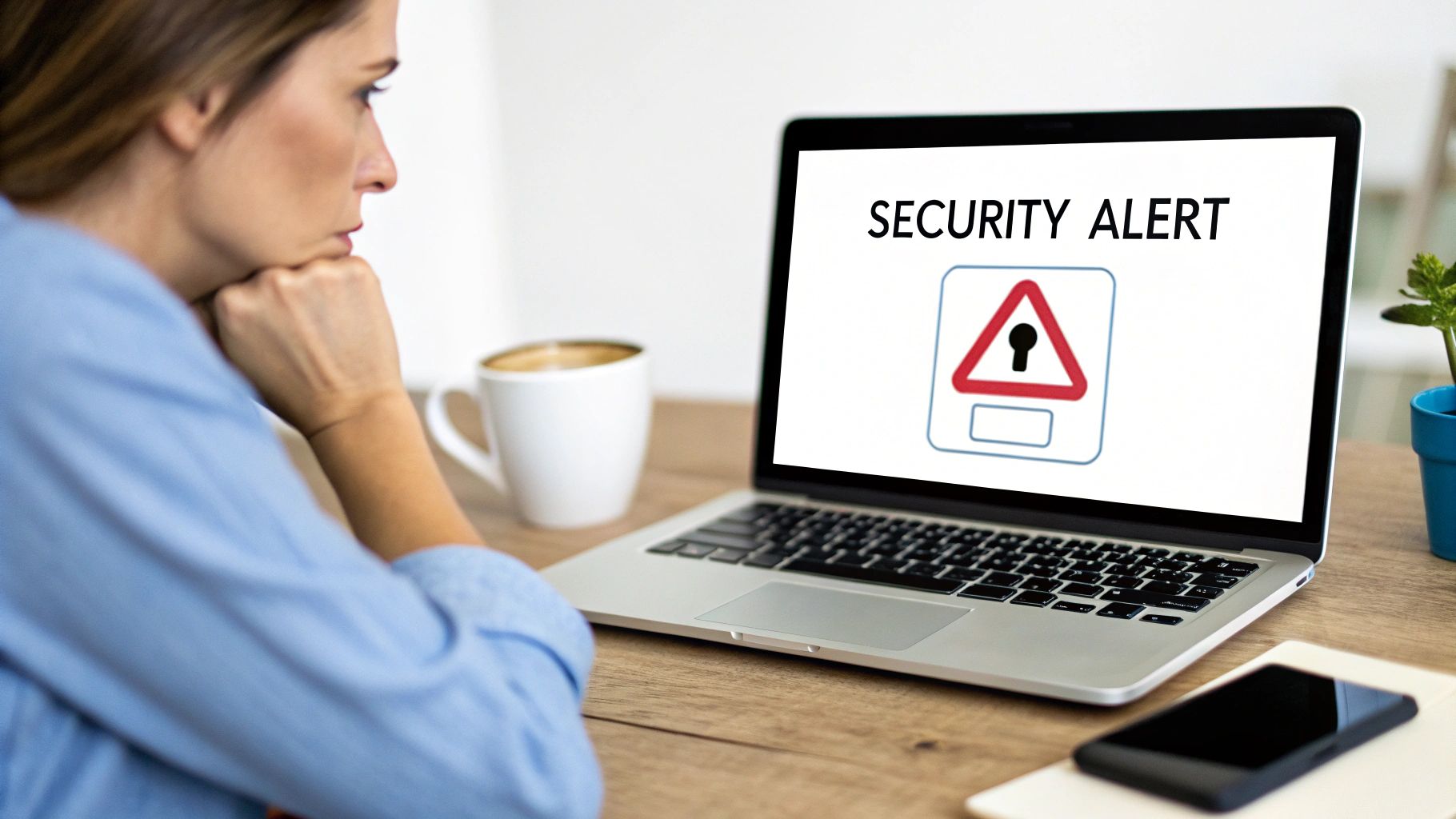
This letter is deployed immediately following the discovery of a security incident. Unlike other apologies that can wait for a full investigation, the priority here is rapid, transparent notification to protect the customer from further harm, such as identity theft or financial fraud.
Strategic Breakdown and Best Practices
When drafting this apology, speed, clarity, and empathy are crucial. The goal is to inform, protect, and reassure the customer without creating panic or using confusing technical jargon. The message must convey that you have control of the situation and are prioritising customer safety above all else.
- Act with Urgency: Do not wait for a complete forensic analysis. Issue an initial notification within 24-48 hours of discovering the incident. The communication should state what you know, what you don't know, and what you are doing to find out.
- Be Direct and Factual: Clearly state the nature of the incident. For example, "unauthorised access to your account was gained" or "a data file containing your contact information was inadvertently exposed". Avoid euphemisms that downplay the severity of the mistake.
- Provide Actionable Protective Steps: This is the most important part. Give customers clear, immediate instructions. This can include guidance on resetting passwords, enabling two-factor authentication, or details on a complimentary identity theft monitoring service you are providing, like the one Equifax offered after its 2017 breach.
- Establish a Dedicated Support Channel: Provide a specific, dedicated phone line or email address for affected customers, staffed by agents trained on the incident. Offering this for a set period, such as 90 days, shows a sustained commitment to their security. For outsourced teams, navigating data security and compliance is a key operational challenge this process helps address.
6. Escalation Handling Failure Apology Letter for Not Resolving Complaints
This type of apology addresses a severe breakdown in the customer support process where an attempt to escalate a complaint was ignored, mishandled, or improperly closed. It's a critical communication for rebuilding trust after a customer has been let down not once, but multiple times. This formal apology letter sample for a mistake is essential for any organisation, particularly those with multi-tiered support systems like BPOs or large contact centres, where escalation pathways are prone to failure.
This letter is deployed when the system designed to resolve complex issues fails, leaving the customer feeling unheard and trapped in a loop of ineffective support. It moves beyond apologising for the initial problem and takes ownership of the subsequent failure to provide a resolution, demonstrating a high-level commitment to correcting both the customer's issue and the internal process that failed them.
Strategic Breakdown and Best Practices
Drafting this apology requires demonstrating a thorough understanding of the customer's frustrating journey and providing a transparent, empowered path forward. It is about restoring faith in the entire support structure.
- Acknowledge the Full History: Explicitly reference the original complaint and the subsequent failed attempts at resolution. Phrases like, "We understand you first contacted us on [Date] regarding [Issue], and your follow-up attempts on [Dates] did not receive the attention they deserved," show you have investigated the entire interaction history.
- Assign a Dedicated Point of Contact: The most crucial element is to break the cycle of being passed around. The apology must come from a manager or a named escalation specialist and include their direct contact information (email and phone number). This assigns clear, personal ownership.
- Outline a New, Structured Escalation Plan: Do not just promise to "look into it". Provide a concrete timeline for the new escalation process. For example: "I will personally oversee your case, and you can expect a detailed update within 24 hours, followed by a full review by our senior team within 48 hours, with a proposed resolution within 5 business days."
- Offer Multiple Monitoring Channels: Empower the customer by giving them control. Provide several ways to track the new escalation, such as a direct phone line, a dedicated email address, or a specific portal link. This transparency helps rebuild the customer's confidence in your resolution process.
7. Cultural Sensitivity & Language Barrier Apology Letter for Misunderstanding
This apology addresses a profoundly sensitive mistake where communication fails due to cultural misunderstandings, language barriers, or an inappropriate tone from a support agent, often within globalised or outsourced teams. It is an essential tool for any international business managing diverse customer bases, from global tech companies to airlines. This formal apology letter sample for a mistake aims to restore trust by demonstrating genuine respect for the customer's cultural background and a commitment to inclusive communication.
This letter is necessary when an interaction leaves a customer feeling disrespected, unheard, or offended due to a cultural or linguistic disconnect. It acknowledges that the failure goes beyond a simple transactional error and affects the customer's sense of identity and belonging.
Strategic Breakdown and Best Practices
Drafting this apology requires deep empathy and cultural awareness. The goal is not just to say sorry for the misunderstanding but to validate the customer's feelings and show that you are actively working to build a more culturally competent support system.
- Acknowledge the Specific Misstep: Be direct and own the failure. Instead of a vague "we apologise for any offence," specify the issue, such as, "We sincerely apologise that the language used by our agent was culturally inappropriate and did not show respect for your background."
- Validate the Customer's Experience: Reassure the customer that their feelings are justified. A phrase like, "It is completely understandable that you felt disrespected by the interaction, and we are truly sorry for the distress this caused," shows empathy and avoids defensiveness.
- Offer Culturally-Aware Resolution: The solution must fit the problem. Offer to connect the customer with a native-speaking agent or a representative specifically trained in their cultural context. Where appropriate, provide a written apology in the customer's native language.
- Detail Systemic Improvements: Explain the long-term actions you are taking. This demonstrates a genuine commitment to preventing recurrence. Mentioning "implementing enhanced cultural competency training for all our support agents" shows the issue is being treated seriously at an organisational level. You can learn more about the role of cultural competency in international customer service to strengthen your team's capabilities.
8. System Outage or Technical Issue Apology Letter for Service Interruption
This type of apology addresses service disruptions caused by system downtime, platform failures, or significant technical glitches. It is an essential communication for SaaS businesses, cloud service providers, and any organisation whose customer experience relies heavily on a stable technology stack. This formal apology letter sample for a mistake is designed to communicate transparency, technical ownership, and a clear roadmap for preventing recurrence.
This letter is deployed when an infrastructure failure affects a broad segment of users, moving beyond individual support tickets to a public or mass communication. Examples include AWS publishing detailed root cause analyses after regional failures or Slack providing transparent postmortems following platform outages.
Strategic Breakdown and Best Practices
When apologising for a technical failure, the focus must be on radical transparency and demonstrating technical competence. Customers understand that systems can fail; their confidence is rebuilt by seeing a robust and honest incident response process.
- Maintain a Live Status Page: Don't wait until the issue is resolved to communicate. A public status page with real-time, chronological updates shows you are actively managing the incident. This transparency reduces inbound support ticket volume from users asking for updates.
- Publish a "Blameless Postmortem": After the service is restored, conduct and publish a post-incident review. Popularised by DevOps culture, this document should explain the root cause, the timeline of the impact and resolution, and what was learned. Framing it as a learning opportunity rather than a blame exercise builds trust.
- Quantify the Impact: Clearly state the duration of the outage (e.g., "from 14:30 to 16:15 GST") and which specific services or user groups were affected. This specificity helps customers assess the direct impact on their own operations.
- Detail Preventive Measures: Go beyond saying "it won't happen again". Explain the specific architectural changes, new monitoring alerts, or process improvements being implemented. For example, "We are now deploying redundant servers in a separate availability zone to prevent a single point of failure."
8-Scenario Apology Letter Comparison
| Apology Type | Implementation Complexity | Resource Requirements | Expected Outcomes | Ideal Use Cases | Key Advantages |
|---|---|---|---|---|---|
| Service Failure & Delayed Resolution (Missed SLAs / Extended Support Delays) | Medium–High — needs SLA data and remediation plan | Ops leads, analytics, senior accountability, possible expedited staffing | Restored trust, reduced churn, measurable SLA improvements | Outsourced support with SLA breaches, ticket backlogs, escalation bottlenecks | Measurable accountability, legal record, improvement roadmap |
| Billing Error (Overcharges / Duplicate Charges) | Medium — requires audit trail and refund processing | Finance, billing systems, legal coordination, refund/credit capacity | Prevents disputes/chargebacks, restores billing confidence | SaaS subscription and ecommerce billing mistakes | Demonstrates financial integrity, reduces payment disputes |
| Product Quality / Delivery Defect (Damaged/Wrong Items) | Low–Medium — coordinate replacements/returns | Logistics, warehouse, refund/replacement budget, shipping resources | Fast resolution, increased retention, quality feedback loop | Ecommerce damaged goods, incorrect shipments, product defects | Humanizes brand, provides immediate remediation and data for QA |
| Communication Failure (Unclear Information / Mixed Messages) | Low–Medium — needs transcript review and clear POC | CRM access, named point-of-contact, agent training | Clarified guidance, fewer repeat contacts, improved consistency | Multichannel support with contradictory agent messages | Restores clarity, prevents downstream issues and repeat tickets |
| Account Access & Data Handling (Privacy / Security Incidents) | High — legal and technical investigation required | Security team, legal/compliance, incident response, monitoring offers | Regulatory compliance, minimized legal exposure, restored trust | Data breaches, unauthorized access, mishandled sensitive data | Demonstrates compliance, offers remediation and security improvements |
| Escalation Handling Failure (Not Resolving Complaints) | Medium — management ownership and new escalation flows | Senior management time, escalation tracking, direct contacts | Resolved complaints, regained confidence, improved escalation process | Ignored complaints, improper routing, closed unresolved tickets | Shows management commitment, prevents public escalation |
| Cultural Sensitivity & Language Barrier (Misunderstanding) | Medium — needs localization and training | Multilingual agents, cultural competency training, translation resources | Repaired relationships, reduced churn in diverse segments | Global 24/7 support, multilingual customer bases | Inclusive CX, better retention among diverse customers |
| System Outage or Technical Issue (Service Interruption) | High — technical root-cause and postmortem required | Engineering, monitoring, redundancy investment, compensation budget | Transparency, infrastructure improvements, reduced churn | SaaS/platform outages, integration failures, major downtime | Technical accountability, supports reliability investment and trust |
From Apology to Action: Integrating Recovery into Your CX Strategy
Throughout this guide, we've explored a variety of detailed apology letter samples for mistakes, ranging from billing errors and product defects to significant data handling incidents and service outages. Each template provides a structured foundation, offering specific subject lines, tonal guidance, and remediation language designed to de-escalate tension and rebuild trust. However, the true power of these examples lies not in their direct application, but in their strategic integration into your broader customer experience (CX) framework.
A well-crafted apology is a critical first step, but it is fundamentally reactive. The ultimate goal for any forward-thinking organisation, especially those managing outsourced or distributed support teams, is to transition from simply apologising for failures to actively preventing them. Each apology letter sent is a valuable data point, a signal highlighting a friction point in your customer journey.
Moving Beyond the Template: Key Strategic Takeaways
As you implement the insights from this article, remember that the letter itself is the final piece of a much larger puzzle. The real work happens behind the scenes.
- Systemic Analysis is Non-Negotiable: Every apology letter sample for mistake should be logged and categorised. Are you seeing a spike in apologies related to billing errors? This points to a potential issue in your payment processing system or a training gap in your finance team. A surge in apologies for delivery defects? It is time to review your logistics partners or quality control processes.
- Apologies are a Training Tool: Use real (anonymised) case studies and the corresponding apology letters as training materials for your contact centre agents. This helps them understand the gravity of certain issues and provides them with approved, empathetic language to use in real-time interactions, ensuring brand voice consistency.
- Empowerment Drives Resolution: Your frontline teams must be empowered to offer the remediation detailed in these letters. If an agent has to seek multiple levels of approval to offer a small credit or arrange a replacement shipment, it adds unnecessary friction and delay, undermining the sincerity of the apology.
Actionable Next Steps: Building a Resilient CX Operation
To translate these concepts into tangible improvements, consider implementing the following steps. This structured approach ensures that each customer issue contributes to a stronger, more proactive service model.
- Create a Centralised "Apology Playbook": Do not leave your agents to guess. Customise the templates provided in this article to align perfectly with your brand voice and operational capabilities. Organise them in a shared knowledge base, clearly categorised by issue type (e.g., "Billing," "Technical," "Logistics").
- Establish a Feedback Loop: Implement a clear process for contact centre agents to escalate recurring issues identified through customer apologies. This could be a dedicated Slack channel, a specific ticket type in your CRM, or a weekly stand-up with operations managers. The key is to ensure that insights from the front line reach the teams who can fix the root cause.
- Measure the Impact of Recovery: Track metrics beyond first-contact resolution. Monitor customer satisfaction (CSAT) scores and Net Promoter Score (NPS) for customers who have received an apology. A successful recovery strategy will often result in these customers reporting higher satisfaction than those who never experienced an issue at all. This phenomenon, known as the service recovery paradox, turns a negative experience into a powerful loyalty-building opportunity.
Ultimately, mastering the art of the apology is about more than just saying sorry. It's about demonstrating respect for your customer's time, business, and trust. By viewing every mistake not as a failure but as an opportunity to listen, learn, and improve, you build a resilient, customer-centric organisation. The apology letter is not the end of the conversation; it is the beginning of a stronger, more transparent relationship with your customers, transforming moments of friction into lasting loyalty.


